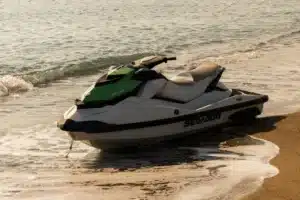
Most personal watercraft insurance policies do cover your jet ski during storage, but “covered” means different things depending on your policy type, where the ski is kept, and whether you’ve notified your insurer. The reassuring answer is that comprehensive coverage typically applies year-round, not just while you’re on the water.
The complicating answer is that layup period clauses, storage facility waivers, and valuation methods can all affect whether a claim actually gets paid. Understanding those details before your jet ski goes into storage is the point of this article.
Yes, Most Jet Ski Policies Cover Storage, But the Details Matter
Comprehensive coverage on a standard personal watercraft insurance policy applies whether your jet ski is in the water or sitting in a garage. This is the key policy component for storage scenarios: it covers non-collision losses including theft, fire damage, vandalism, hail, and flooding regardless of whether the watercraft is in active use. It is not the same as liability coverage, which only applies when the ski is being operated.
Keeping that distinction clear matters because some jet ski owners assume that pulling the vehicle out of the water means coverage pauses automatically. It does not, as long as the policy stays active. Canceling or suspending your policy to save money during the off-season eliminates the protection most relevant to a stored watercraft.
Where you store the ski and what policy type you carry can both affect whether a specific claim is paid. The sections below break down exactly what that means.
What Comprehensive Coverage Actually Protects in Storage
Comprehensive coverage pays for losses that are not caused by a collision with another object or vessel. In a storage context, that includes:
- Theft
- Fire
- Vandalism
- Hail
- Flooding
- Animal or rodent damage
This protection applies whether the jet ski is at a marina, in a home garage, or at an off-site storage facility, as long as the policy is active and the storage location has been disclosed to the insurer.
A named perils policy is narrower: it only covers losses explicitly listed in the policy document. If your policy is structured this way, check the list carefully to confirm it includes the perils most likely during storage months.
What Comprehensive Coverage Does Not Cover
Policy exclusions are where owners get surprised:
- Mechanical breakdown during storage. Almost universally excluded: a dead battery, a corroded fuel system, or a cracked impeller from improper winterization will not produce a paid claim.
- Damage from the owner’s own negligence, including failure to winterize the engine.
- Mold, gradual deterioration, and wear-and-tear. These develop over time rather than as sudden losses, and standard marine insurance policies do not treat them as insurable events.
Most insurers treat the storage location as a material fact. A significant change in where the watercraft is kept may require you to notify your insurer to keep coverage valid. Moving a jet ski from your home driveway to a commercial facility without updating your policy could give an insurer grounds to dispute a claim. Here is how the four most common storage scenarios break down.
Home Garage or Driveway
A jet ski stored at your residence is typically covered under your watercraft policy’s comprehensive section. Some homeowners insurance policies include a watercraft endorsement, but coverage under a homeowners policy is minimal: most cap watercraft coverage at $1,000 to $1,500 and may exclude theft that occurs away from the premises. Homeowners insurance is not a substitute for a dedicated personal watercraft insurance policy. Confirm with your insurer which policy responds first if a loss occurs at home.
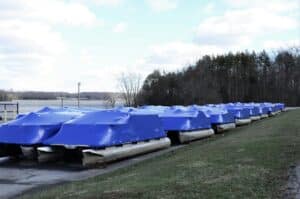
Outdoor Storage on a Trailer
A jet ski on a trailer, whether parked at home or at a storage facility, falls under the watercraft policy’s comprehensive section for most standard policies. Some insurers require the trailer itself to be separately listed on the policy before a trailer-related theft or damage claim will be paid.
Outdoor exposure also increases the risk of vandalism and storm damage compared to covered storage, which is worth factoring into your deductible calculation before you commit to an uncovered spot. If covered options are available, carport and covered storage can reduce that exposure meaningfully.
Indoor Marina or Boat Storage Facility
Commercial marinas and boat storage facilities almost universally include liability waivers in their lease agreements. These waivers mean the facility accepts no financial responsibility for theft or damage that occurs on their property.
Your own comprehensive coverage must respond, and most standard personal watercraft insurance policies do extend storage coverage to commercial locations. Read the storage contract before signing so you are not caught assuming the facility carries responsibility it has legally disclaimed.
Dedicated Off-Site Storage Lots
A facility designed specifically for watercraft and recreational vehicles typically offers better physical security than a general self-storage lot, with features like gated access and surveillance that can influence both your insurer’s risk assessment and your own confidence during the storage months.
RecNation boat and jet ski storage facilities are built specifically for large recreational vehicles and watercraft, with secured access and covered options that serve both needs. Some policies require you to disclose the storage address, and failing to update that information after relocating your jet ski could give an insurer grounds to dispute a claim.
Understanding the Layup Period Clause
A layup period clause is a provision in many personal watercraft insurance policies that suspends liability coverage during a defined off-season window, typically in exchange for a reduced insurance premium. The clause does not eliminate comprehensive and collision coverage: your jet ski remains protected against theft, fire, and weather damage during the layup period. What it removes is the liability protection that would respond if you caused an accident on the water.
That trade-off has a practical consequence. If you take the jet ski out on a mild winter day during the declared layup window and cause an accident, liability coverage will not respond. Layup endorsements are a standard feature in marine insurance, confirmed by the Insurance Information Institute’s boat coverage guidance, but the exact terms vary by insurer. Progressive, for example, specifically advertises a layup period discount for boats stored over winter, while other insurers structure the same feature differently, so reading the specific language in your policy matters before you declare a layup period.
Does a Layup Period Reduce My Premium?
Yes. Declaring a layup period reduces the insurance premium because the insurer is no longer carrying liability risk during the off-season months. The reduction varies by insurer and region, but it can be meaningful for owners who store their jet ski for five or more months per year. The savings come with the trade-off of restricted operational flexibility during that window.
What to Ask Your Insurer Before Declaring a Layup Period
Before you declare a layup period, ask your insurer these specific questions:
- Does the layup period suspend only liability coverage, or does it also affect comprehensive and collision protection?
- What are the exact start and end dates of the declared period, and what happens if I need to move the jet ski before it ends?
- Is there a penalty for reinstating full coverage mid-layup?
- Does the layup clause require me to notify you in writing, or can it be declared over the phone?
Agreed Value vs. Actual Cash Value: Why It Matters More in Storage
The valuation method your policy uses becomes more consequential the longer your jet ski sits in storage. Agreed value coverage means the insurer and owner set a fixed amount at the time the policy is written, paid in full on a total loss with no depreciation deduction. Actual cash value (ACV) coverage pays the market value at the time of loss, which accounts for depreciation, and personal watercraft depreciate steeply: often 20% or more in the first year alone, settling to a slower rate after that.
For a stored jet ski, that timing works against ACV owners. A $15,000 jet ski that sits in storage for its first 12-24 months and is then destroyed in a fire has already absorbed its steepest depreciation hit despite never being ridden, so an ACV payout can fall well short of replacement cost.
Owners with newer or higher-value watercraft should confirm whether agreed value coverage is available, and whether the amount on file still reflects current market value.
How to Check Which Valuation Method Your Policy Uses
Look at your policy declarations page. It should specify “agreed value,” “stated value,” or “actual cash value” under the hull or physical damage section. If the language is unclear, call your insurer and ask directly.
Be aware that stated value is a third option that behaves differently from agreed value. The insurer pays the lesser of the stated amount or the actual cash value at the time of loss, which can produce the same depreciation problem as an ACV policy. If your declarations page says “stated value,” treat it as you would an ACV policy for planning purposes.
Should You Keep Full Coverage While Your Jet Ski Is in Storage?
A stored jet ski that is stolen, catches fire, or is damaged in a storm is just as expensive to replace as one damaged on the water. Dropping to liability-only coverage or canceling entirely during the off-season eliminates the very coverage that matters most during storage months. That is the core reason most insurance advisors recommend keeping at least comprehensive coverage active year-round.
The legitimate alternative is a layup period endorsement that reduces your insurance premium while keeping comprehensive and collision protection in force. If your jet ski is financed, check your loan agreement before making any coverage changes. Many lenders require continuous full coverage, and dropping to liability-only may violate the terms.
Factors to weigh before deciding on off-season coverage:
- Watercraft value: If the market value of your jet ski is low relative to what you’re paying annually for comprehensive coverage, a layup endorsement may offer better math than full coverage.
- Financing status: Lenders often require full coverage as a loan condition, regardless of whether the ski is in use.
- Storage location security: A secured, monitored facility lowers theft risk compared to an uncovered outdoor lot, which may justify a premium review.
- Local risk exposure: Wildfire, hurricane, and flood risk vary by region and should inform how much comprehensive coverage you carry during the off-season.
When Adjusting Coverage Makes Sense
Adjusting coverage during storage can be the right call in specific situations. If your jet ski is older and its market value is low relative to the annual cost of comprehensive coverage, it is worth comparing what a claim would pay against what you’re spending. A layup endorsement is often the better path than canceling coverage outright, since it preserves the protection that matters while reducing the premium.
If you are also reconsidering your storage setup and want to understand how much storage costs factors into that decision, it is worth reviewing before committing to a facility.
Final Thoughts on Insuring a Stored Jet Ski
When the off-season arrives and your jet ski needs a safe place to sit, the storage facility you choose can affect more than convenience. It can affect whether your insurer pays a claim if something goes wrong. RecNation boat and jet ski storage offers secured, purpose-built storage for watercraft across multiple states, with covered and uncovered options designed to keep your personal watercraft protected between riding seasons.
Frequently Asked Questions
Is a jet ski covered by homeowners insurance when in storage?
Homeowners insurance provides very limited watercraft coverage and is not adequate protection for a jet ski in storage. Most homeowners policies cap watercraft coverage at $1,000 to $1,500 and may exclude theft away from the premises entirely. A dedicated personal watercraft insurance policy with comprehensive coverage is the correct product for a stored jet ski.
Does jet ski insurance cover theft during winter storage?
Yes, if your policy includes comprehensive coverage, theft is covered whether your jet ski is on the water or in off-season storage. Comprehensive coverage responds to theft and vandalism regardless of whether the watercraft is in active use. The key requirement is that your policy remains active during the storage period. Canceling it eliminates this protection entirely.
Do I need insurance on my jet ski if it is not being used?
You are not legally required to carry liability insurance on an idle jet ski in most states, but dropping coverage entirely means the watercraft is unprotected against theft, fire, and storm damage. A layup period endorsement is a better option for most owners: it suspends liability coverage during off-season months and reduces your insurance premium while keeping comprehensive and collision protection in force.
What type of insurance covers a jet ski stored on my property?
A personal watercraft insurance policy with comprehensive coverage is the appropriate product. Comprehensive coverage protects against non-collision losses including theft, fire damage, and storm damage, whether the jet ski is at your home, at a marina, or at an off-site storage facility. Homeowners insurance is generally not sufficient because its watercraft coverage is minimal.
Does comprehensive jet ski insurance cover damage in a storage facility?
In most cases, yes. Comprehensive coverage extends to losses that occur at a commercial storage facility, including theft and fire. However, most storage facility rental contracts include liability waivers stating that the facility bears no responsibility for damage or theft on their property, so your own policy must pay the claim. Confirm with your insurer that your policy covers the watercraft at the specific storage address before signing a contract.
Should I notify my insurer when I put my jet ski in storage?
You should notify your insurer if the storage location changes from what is listed on your policy. For example, moving the jet ski from your home garage to a commercial storage facility is a material change. Failing to disclose it could give an insurer grounds to dispute a claim. It is also a good time to ask whether a layup period endorsement is available to reduce your insurance premium during the months the ski will not be on the water.